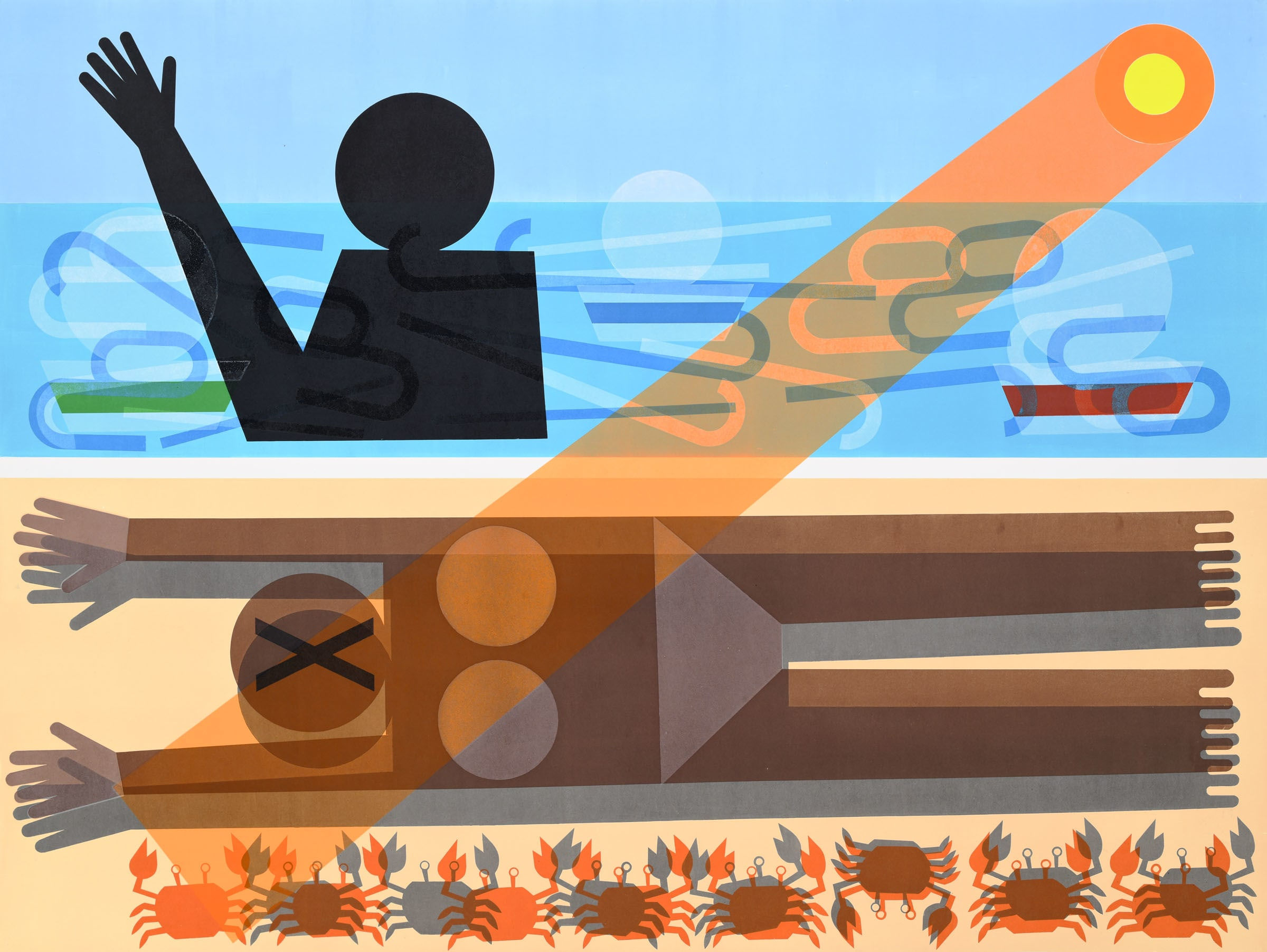
Double Exposure, 2025
Relief print
46 1/2 x 62 1 /2"
Copyright The Artist
All matrixes are inked relief and printed on an etching press. Each print went through the press 8-14 times and had 14-20 colors with more colors achieved through layering and...
All matrixes are inked relief and printed on an etching press. Each print went through the press 8-14 times and had 14-20 colors with more colors achieved through layering and transparency. Fields of color are initially rolled onto a large magnetic matrix and then printed. Each shape, mark, figure, mountain, etc. layered on top is an individual magnetic relief plate that is hand inked before each trip through the press. Sometimes textures created by Nina are rolled onto the relief plates (the fish for example).
Double Exposure presents a split reality—two bodies caught in the same environment, yet met with vastly different outcomes. The upper figure floats with an arm raised, sunlit and alone, while the lower figure lies rigid on the sand, arms outstretched, pinned beneath the same burning beam of light. The palette and symmetry link the two, but the shift in posture, energy, and placement makes the difference between being alive and being left behind. Below, the beached figure is surrounded by a parade of crabs. These aren’t innocent beachside details ;they are scavengers. In nature, crabs descend upon what’s already gone—cleaning, dismantling, repurposing the remains. Here, they circle the body like a silent alert. Their presence signals death, decay, aftermath. They animate the image with a quiet violence—slow, creeping, inevitable. The figure has become part of the ecosystem, consumed not just by heat but by the environment’s response to absence.Double Exposure is not just about leisure in the face of environmental collapse—it’s about the threshold between enjoyment and erasure. The same sun that glints off the water in one half of the composition scorches the body below. Climate change doesn’t arrive as spectacle—it accumulates slowly, indiscriminately, until the beachgoer becomes the beached. The crabs are not monsters—they’re messengers. They don’t create harm, but they signal that harm has occurred.
Double Exposure presents a split reality—two bodies caught in the same environment, yet met with vastly different outcomes. The upper figure floats with an arm raised, sunlit and alone, while the lower figure lies rigid on the sand, arms outstretched, pinned beneath the same burning beam of light. The palette and symmetry link the two, but the shift in posture, energy, and placement makes the difference between being alive and being left behind. Below, the beached figure is surrounded by a parade of crabs. These aren’t innocent beachside details ;they are scavengers. In nature, crabs descend upon what’s already gone—cleaning, dismantling, repurposing the remains. Here, they circle the body like a silent alert. Their presence signals death, decay, aftermath. They animate the image with a quiet violence—slow, creeping, inevitable. The figure has become part of the ecosystem, consumed not just by heat but by the environment’s response to absence.Double Exposure is not just about leisure in the face of environmental collapse—it’s about the threshold between enjoyment and erasure. The same sun that glints off the water in one half of the composition scorches the body below. Climate change doesn’t arrive as spectacle—it accumulates slowly, indiscriminately, until the beachgoer becomes the beached. The crabs are not monsters—they’re messengers. They don’t create harm, but they signal that harm has occurred.
Join our mailing list
By completing this form, you confirm that you would like to subscribe to Nina Chanel Abney’s newsletter and receive information about exhibitions and upcoming events. Your email address will be used exclusively for the newsletter service.
* denotes required fields
We will process the personal data you have supplied to communicate with you in accordance with our Privacy Policy. You can unsubscribe or change your preferences at any time by clicking the link in our emails.